Game Categories
Schedules
Unexpected tasks can cause anxiety in children with autism. Schedules are a systemic approach used to prepare them for both existing routines and for when unexpected or new tasks are required. Sequences of steps are used to prepare for changes in routine and to visually enforce concepts.
By breaking activities into clear steps and presenting them visually, schedules help children know what to expect. A Picture Exchange Communication System (PECS) can be used to outline the sequence to completing a single task, event, day or week.
Why this matters
Knowing "what's next" helps children feel calm and in control. The DSM-5 criterion B2, insistence on sameness describes inflexible adherence to routines. Visual schedules build independence by teaching sequencing skills to give children confidence at home, at school, and in the community.
How you can support at home
- Start simple:
Use a 2-3 step visual schedule for daily activities like preparing for bedtime. - Use visual aids in your calendar:
Photos, drawings or PECs cards can make routines easier to understand. - Prepare for change in advance:
If you know a routine will be different, such as a weekend birthday party, add it to the schedule early and talk about it together.
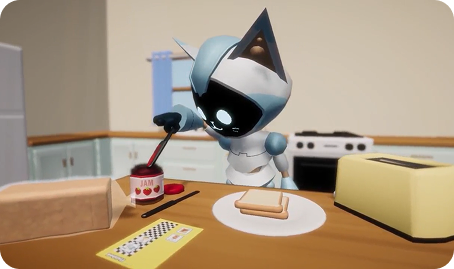
Daniel the Robocat
This game helps autistic children understand schedules by using visual representations of objects, pictures, and symbols in the context of daily routines.
- Introduces the concept of schedules using real objects, pictures, and symbols.
- Helps children understand daily routines in both home and school settings through sequences of events.
- Reinforces real-world keywords like 'first' and 'correct order' for positive behavioral outcomes.

Rabbit's Birthday
Rabbit's Birthday develops an understanding of how schedules and PECS can be used in real-world situations. Through narrative-based game play, children can better understand how schedules can be used to reduced anxiety and help them cope with changing events.
- Introduces typical birthday party events that are relatable to real-life scenarios
- Visualises the use of a schedule throughout the day and helps players understand its use
- Enforces key phrases that can be used in real-life scenarios involving schedules, such as 'what's next on the schedule?'
Related guides
- Daily Routine Visual Supports for Autistic Children
Visual supports and structured routines help autistic children understand what comes next. Discover how to create effective visual schedules for home and school.
- Visual Schedules for School Transitions: A Parent's Guide
School transitions can be stressful for autistic children. Learn how visual schedules and structured supports can ease the move between classrooms, schools, and daily routines.