Game Categories
Non-Verbal Gestures
A child with autism may not link their pre-existing knowledge of emotions, likes, and dislikes to another person's non-verbal gestures. As a result, they can benefit from seeing gestures alongside spoken words.
Whizkid Games helps children practise recognising and pairing gestures with meaning. For example, linking a thumbs up with “I like it” or a wave with “hello”.
Why this matters
By seeing gestures alongside spoken words in playful contexts, children can build stronger connections between what people do, say, and feel. Understanding gestures is an important step in social communication. Many conversations rely on body language as much as words. When children can link gestures with meaning, they are better able to interpret others, respond appropriately, and feel more confident in group and one-on-one interactions.
How you can support at home
- Model gestures:
Use gestures while you speak, like giving a thumbs up when praising your child, or fanning your face when describing the hot weather. - Keep it consistent:
Repeat the same gesture with the same pairing phrases so that your child can build stronger associations. - Story time with gestures:
While reading, add gestures to characters’ actions, such as shaking your head when describing a dislike.
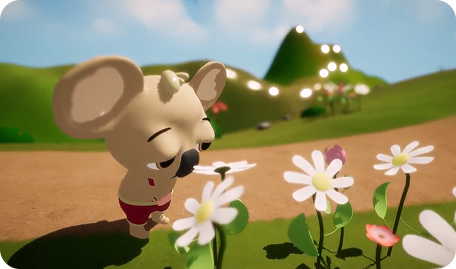
Kody’s World
‘Kody's World’ is an educational game that helps users understand gestures through repetition and imitation.
- Appealing character animations of a variety of gestures that describe likes and dislikes
- Promotes the imitation of everyday nonverbal gestures for the player
- Emphasises keywords ('yes', 'no', 'likes', 'does not like') that can be used by carers in real-world scenarios.
Marty the Mime
‘Marty the Mime’ groups gestures with respective facial expressions and spoken words to teach players about feelings.
- Appealing character animations of a variety of gestures that describe likes and dislikes
- Promotes the imitation of everyday nonverbal gestures for the player
- Emphasises keywords ('need', 'want', 'sad', 'happy') that can be used by carers in real-world scenarios.
Related guides
- Understanding Non-Verbal Communication in Autism
Non-verbal cues like gestures and body language can be challenging for autistic children. Learn how to support their understanding of non-verbal communication.