Game Categories
Matching Emotions
It is a common misconception that autistic people lack the ability to feel emotions. In reality, autistic children often experience emotions just as deeply as their peers. What can be challenging is recognising emotions in others and communicating their own feelings.
Whizkid Games provides a safe and engaging way for children to practise identifying emotions. Through playful scenarios and clear visual cues, children can learn to match facial expressions and body language with the emotions they represent.
Why this matters
Being able to recognise emotions in others is a foundation for communication and relationships. Practising emotional recognition can reduce misunderstandings, improve self expression and support emotional well-being.
How you can support at home
- Use visual support:
Emotion cards, picture books, or even emojis. - Talk about your feelings in the moment:
If your child looks joyful after finishing a puzzle, you could say, “I see your smile, you look happy!” - Model emotions:
Show your own feelings with words and facial expressions, for example, yawning while saying “I feel tired”.
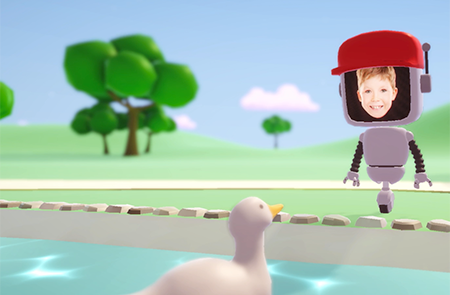
Robbie the Robot
Robbie the Robot helps children with autism to recognise emotions.
- Uses 3D animations and real facial expressions to communicate the emotion that the robot character is feeling.
- Many autistic children find mechanical objects engaging. By combining this with a human face, the child can practice identifying emotions in an enjoyable, non-confrontational environment.
- The game reinforces keywords (‘happy’, ‘sad’, ‘angry’, ‘surprised’), which can be used by parents and teachers for encouraging positive behaviours in real-world scenarios.
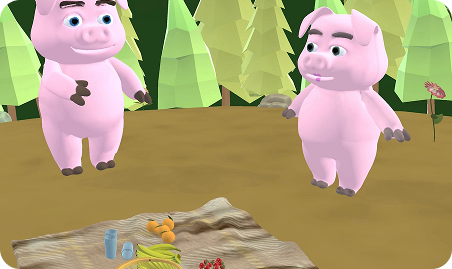
Oink Oink
This game helps children with autism to understand why people feel certain emotions.
- Exhibits scenarios that involve various emotions, allowing players to link situations with feelings.
- Utilises character animation combined with facial expressions to match emotions, encouraging imitation from players.
- Reinforces emotional keywords (‘happy’, ‘sad’) that can be used in real-world scenarios.
Related guides
- Teaching Emotion Recognition to Children on the Autism Spectrum
Emotion recognition is a key social skill. Explore evidence-based approaches including games, visual aids, and activities to help autistic children identify and understand feelings.
- Helping Autistic Children Manage Anxiety and Big Emotions
Anxiety in autistic children often looks like rigidity, irritability, or shutdown. Learn to spot it, find the triggers, and build a calm-down plan that works.