Game Categories
Grouping Objects
Grouping objects helps autistic children develop an understanding of characteristics and attributes such as size, shape, or colour. These skills are not only useful in the classroom but also in everyday life at home.
By practising grouping, children learn how to organise. This might mean sorting toys into bins, putting clothes into the right drawers, or matching cutlery at the dinner table. At school, grouping is also an important foundation for early maths, science, and language activities.
Why this matters
Being able to categorise is a key step in learning how the world is structured. Grouping objects supports problem-solving, organisation, and critical thinking. It also provides the building blocks for more advanced learning, like recognising patterns and understanding differences.
How you can support at home
- Turn tidying into learning:
Sorting toys into boxes and clothes into the right piles can reinforce what they have learned in-game. - Cook together:
Ask your child to help by sorting ingredients or grouping utensils before cooking. - Play simple games:
Try finding “all the red things in the room” or “everything that’s shaped like a circle”.
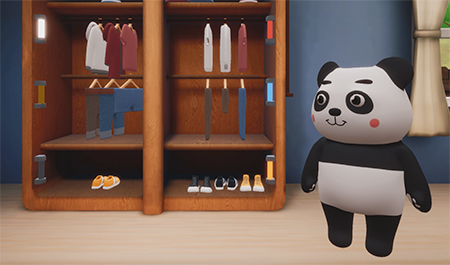
Panda Weather
This game enforces the concept of categorising objects by their attributes by picking appropriate clothing for various weather conditions.
- Teaches players the attributes and purposes of everyday clothing
- Develops skills for independent dress-up in real-life scenarios
- Teaches children appropriate wear for specific weather conditions
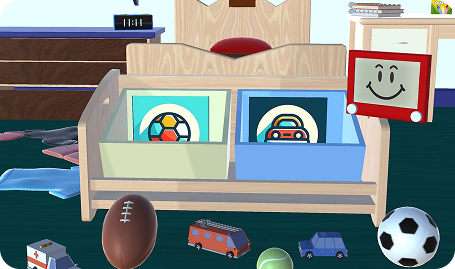
Grouping with Sketchy
Grouping with Sketchy is dedicated to teaching players how to group objects for the purpose of organisation.
- Provides visuals for players to sort objects using visual characteristics
- Teaches skills that are applicable to problem solving, self-regulation and independence
- Develops critical thinking and categorisation abilities essential for early learning
Related guides
- Teaching Categorisation and Sorting Skills to Autistic Children
Categorisation and sorting are foundational cognitive skills. Learn hands-on strategies and game-based activities to help autistic children master grouping and classification.